Mid-Year 2022 Functional GI Trends Webinar Recording & Highlights

Each year, Digestive Disease Week® (DDW) brings the gastrointestinal (GI) community together to exchange knowledge, formulate ideas and uncover new ways to improve the lives of those living with digestive diseases. Gastroenterologists, researchers, and other industry professionals gathered in San Diego and virtually for DDW2022® to share best practices, ground-breaking research, and industry expertise. Following…

Digestive Disease Week (DDW 2022) Preview: The Biggest Functional GI Community Topics

Digestive Disease Week® 2022 (DDW 2022) is the world’s premier meeting for gastroenterology, hepatology, endoscopy, and gastrointestinal surgery. Sponsored by four leading societies — AASLD, AGA, ASGE, and SSAT — DDW brings physicians, researchers, and other industry professionals together to exchange knowledge, formulate ideas and uncover new ways to improve the lives of those living with…

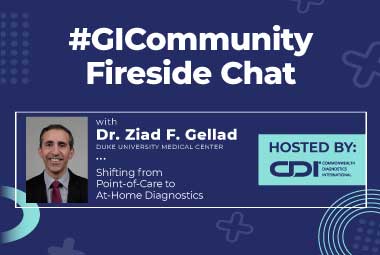
From Point-of-Care to At-Home Breath Testing: A GI Community Fireside Chat with Dr. Ziad Gellad

The COVID-19 pandemic has brought aerosol-related diseases to the forefront of the healthcare conversation. Health systems and GI practices alike continue to grapple with the best ways to diagnose and treat patients in a specialized, affordable, and safe manner. As telehealth and virtual visits become a mainstay in the healthcare delivery model, so must the…

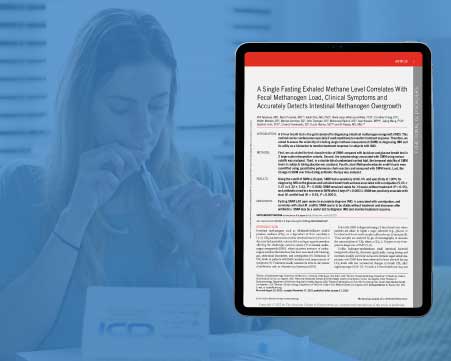
Breath Testing for Intestinal Methanogen Overgrowth (IMO) Validated by New Study

A recent study concludes that a single methane measurement (SMM) from a hydrogen and methane breath test can accurately diagnose intestinal methanogen overgrowth (IMO), potentially replacing the standard 2-hour breath test. A Single Fasting Exhaled Methane Level Correlates With Fecal Methanogen Load, Clinical Symptoms and Accurately Detects Intestinal Methanogen Overgrowth, which analyzes the ability of…

Breath Testing Models for Gastrointestinal Disorders

A Pro-Forma Comparison of Breath Testing Models for Gastrointestinal Disorders

When patients present with symptoms related to functional gastrointestinal (GI) disorders or Disorders of the Gut-Brain Interaction (DGBI) like Small Intestinal Bacterial Overgrowth (SIBO), Intestinal Methanogen Overgrowth (IMO), and Carbohydrate Malabsorption, the recommended method of diagnosis is clinical breath testing. Each breath test – overseen by providers at healthcare facilities or taken by patients in…

Highlights and Recording from 2021 Year in Review + 2022 Outlook Functional GI Trends Webinar

The GI community continues to work in unprecedented times caused by impact of the COVID-19 pandemic. Patients have seen increased prevalence and flare-ups of GI-related symptoms due to increased stress and anxiety along with changes in dietary and exercise habits, while providers have had to navigate changes to the healthcare delivery model. As we wrap…

Breath Testing and Aerosol-Generating Procedures in Gastroenterology

GI leaders call for updated guidelines from industry medical professional societies for breath testing amidst ongoing COVID-19 concerns caused by aerosol-generating procedures (AGPs) Download Full Digital Copy of “Breath Testing and Aerosol-Generating Procedures in Gastroenterology”DOWNLOAD NOW As of early May 2020, the CDC listed aerosol inhalation as one of the coronavirus’s most significant ways to…

Breath Testing for Gastrointestinal Conditions and the Importance of Proper Preparation

How is breath testing currently used in gastroenterology? Breath testing in gastroenterology is a non-invasive and straightforward way for health care providers to diagnose common sources of digestive distress. This digestive distress can result from bacteria entering and proliferating the small intestine, producing trace gases not usually generated by the body. Having a higher level…

Hydrogen and Methane-Based Breath Testing

FODMAPs 101: What are FODMAPs and When to Recommend a Low-FODMAP Diet

What are FODMAPs? FODMAP, which stands for Fermentable Oligosaccharides, Disaccharides, Monosaccharides, And Polyols, are groups of small-chain carbohydrates that, very often, are not wholly absorbed in the small intestine. The FODMAP carbohydrates, more specifically sugars and fibers, can be found in everyday foods such as: Fructose — fruits, honey, high-fructose corn syrup, agave Lactose sugar…